
Loading...
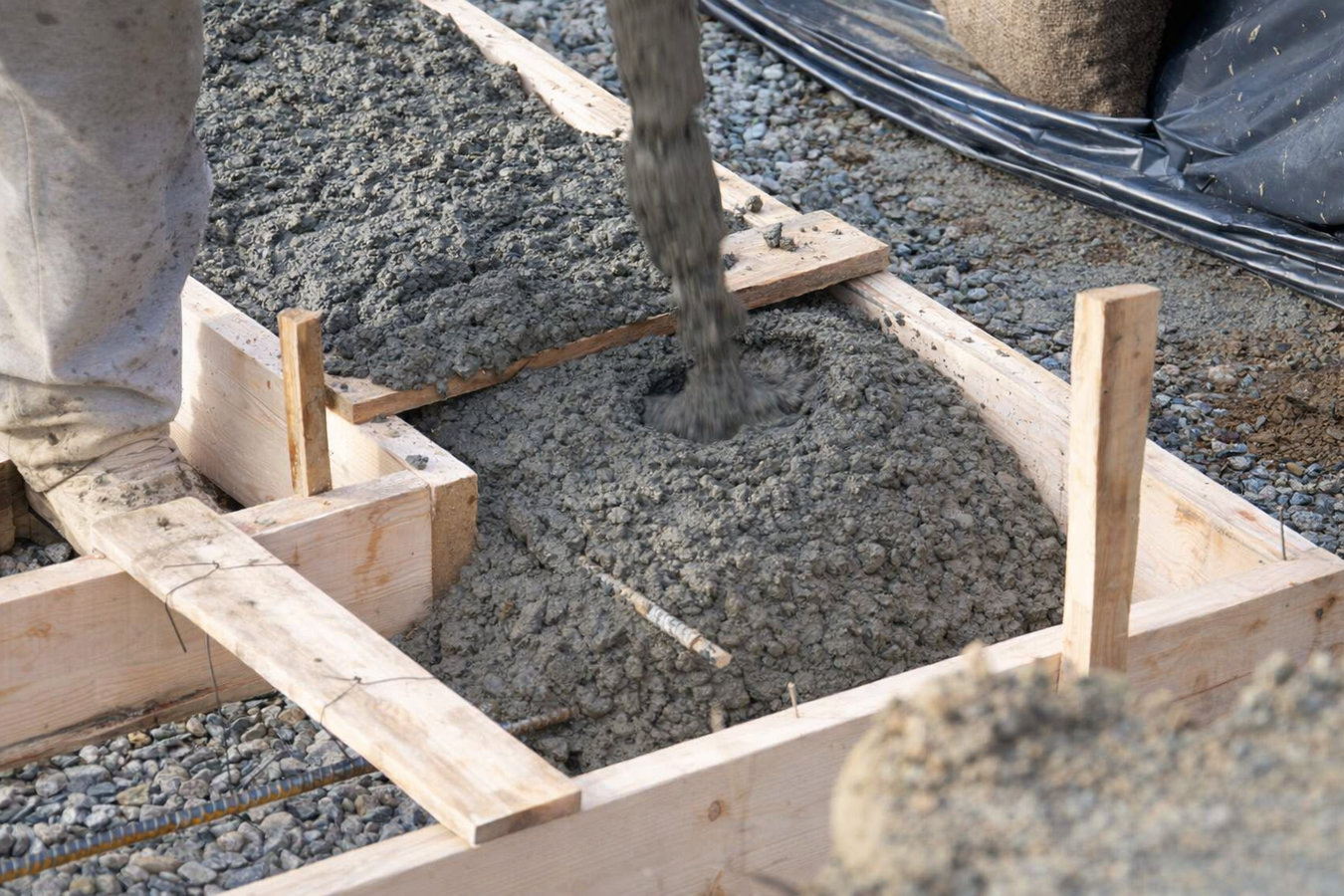
A deck, addition, or ADU is only as solid as what is underneath it. We install concrete footings in Santa Clara designed for seismic loads, local clay soils, and city permit requirements so your structure stays level and safe for decades.
Concrete footings in Santa Clara are the buried anchors that carry the load of a deck, addition, ADU, or garage down into stable ground - most residential projects take one to two days of active work, with a required city pre-pour inspection and permit review adding one to three weeks before the concrete can be poured.
Most homeowners call us when they are planning to build - a new deck, a room addition, a backyard ADU, or a detached garage. In Santa Clara, those projects always involve footings because the city requires it, and because the Hayward Fault and local clay soils mean the work needs to be done to a higher standard than most parts of the country. Getting footings right is the kind of thing you only appreciate later, when the structure above them is still perfectly level five or ten years on.
For larger projects where the footings support a full new structure, our foundation installation service covers the complete below-grade scope, including slab, stem walls, and drainage.
Any new structure that bears weight - a deck, a room addition, a detached garage, a pergola, or structural fence posts - needs proper footings before construction begins. If a contractor quotes you a project like this without mentioning footings or permits, that is a sign to ask more questions. In Santa Clara, skipping this step is not just a code violation - it is a real safety risk given the seismic activity in the area.
Diagonal cracks running from the corners of doors or windows, gaps opening between your deck boards and the house, or sections that feel springy underfoot can all indicate that footings below have shifted or settled. In Santa Clara, expansive clay soils can cause this kind of movement over time, especially after a wet winter followed by a dry summer. A contractor can assess whether the footings are the source of the problem.
When a footing settles unevenly, the frame of the structure above it shifts slightly out of square. The first sign homeowners usually notice is a door or window that used to open smoothly but now sticks or will not latch properly. This is worth investigating sooner rather than later - the longer a footing problem goes unaddressed, the more expensive the repair tends to be.
Santa Clara's active ADU permitting environment means many homeowners are converting garages or building backyard units. These projects almost always require new or upgraded footings to meet current structural and seismic standards, even if the existing slab looks solid. If you are in the planning stages of an ADU, a footing assessment should be one of your first conversations with a contractor.
We handle the complete footing scope - site assessment, utility marking, excavation to the required depth, rebar placement and tying, form setup, permit application, and coordination of the city pre-pour inspection. We do not pour until the inspection has been approved. Once the concrete has cured and the inspector has signed off, the site is backfilled and ready for the next phase of your project. For projects where the footings support a complete new foundation rather than an isolated structure, our foundation installation service handles the broader scope.
Santa Clara's seismic environment means every footing design we use accounts for lateral forces, not just downward load. Homeowners adding larger structures - multi-room additions or accessory dwelling units - sometimes find that existing footings need to be upgraded as well as new ones installed. For those cases, our foundation raising service addresses below-grade structural issues on older homes that were not built to current seismic standards.
For freestanding or attached decks. Sized and reinforced for the deck load and Santa Clara seismic requirements, with city permit and pre-pour inspection included.
For room additions, accessory dwelling units, and garage conversions. Engineered for the structural and seismic demands of habitable space in Santa Clara.
For new detached garages and workshops. Includes perimeter footings sized to carry the wall and roof loads of a full structure.
For pergolas, carports, and covered outdoor structures. Individual pier footings placed at each post location with appropriate bearing depth for local soil conditions.
Santa Clara sits close to several active fault systems, including the Hayward Fault to the east. That proximity means footings here must handle lateral earthquake forces in addition to the vertical weight of whatever sits on top. In practical terms, this translates to more rebar, careful placement, and designs reviewed to meet the current California Building Code seismic provisions. Homes built before the 1990s in particular may have footings that were never designed for these loads - which is why older structures in Santa Clara often need upgraded footings when a room addition or ADU is added.
We work throughout the South Bay, including homeowners in San Jose and Fremont facing the same seismic and clay-soil conditions as Santa Clara. Every footing project we do in the city goes through the City of Santa Clara Building Division permit process, including the required pre-pour inspection that verifies depth and reinforcement before a single yard of concrete is poured.
We visit your property, assess soil conditions, and review what you are building before writing a quote. Soil type and site access both affect footing design and cost here, so an on-site visit is the only way to give you an accurate number. We reply to all inquiries within 1 business day and typically schedule site visits within the same week.
We submit the permit application to the City of Santa Clara and schedule the pre-pour inspection. The inspection happens after the trenches are dug and the rebar is set - before any concrete is poured. This step typically adds one to three weeks to the timeline and is non-negotiable. It is also genuinely in your favor - an independent inspector confirms the footing is right before it is buried.
The crew digs trenches or holes to the required depth, marks utility locations with 811 beforehand, and places and ties the steel reinforcement. This phase usually takes one day for smaller projects. Excavated soil is staged nearby and used for backfill once the footing is approved.
Once the inspection is approved, we pour the concrete, level the top surface, and protect the fresh pour from drying too quickly. Most contractors wait at least a week before framing begins on top. We give you a clear timeline in writing and let you know exactly when the footings are ready for the next phase of your build.
We assess your soil, handle the permit, and coordinate the pre-pour inspection. Free estimate, 1-business-day reply. No surprises once work starts.
(669) 348-0305We never pour concrete until the city inspector has signed off on the footing. This is required by Santa Clara, and we treat it as a fundamental step rather than a scheduling inconvenience. You end up with an independent confirmation that the footing was done correctly before it is buried - permanently.
Santa Clara sits near active fault systems, and every footing we install is designed to handle the lateral forces of an earthquake - not just the weight pressing down from above. We do not treat seismic reinforcement as an upgrade. It is part of how we design every footing in this area.
We work on footing projects throughout the South Bay and East Bay, with experience in Santa Clara, San Jose, Sunnyvale, Fremont, and nine other cities. That regional volume means we know what local inspectors expect and what soil conditions to anticipate before we arrive at your property.
Parts of Santa Clara sit on clay-heavy soils that require wider or deeper footings than a standard design assumes. We assess your specific site conditions before writing the final scope - so the footing we install matches what is actually under your yard, not what a standard specification assumes.
Every contractor doing structural work in California must hold an active license from the California Contractors State License Board. You can verify any contractor's license in about two minutes - it tells you they are legally allowed to do this work and carry the required insurance. The combination of permitting discipline, seismic-aware design, and soil assessment is what gives you a footing that holds up through decades of Bay Area wet-dry cycles and occasional shaking.
When the foundation itself needs to be lifted and stabilized, foundation raising addresses the root cause rather than patching symptoms.
Learn moreBuilding a new structure from the ground up starts with a complete foundation installation designed for Santa Clara's seismic and soil conditions.
Learn moreSanta Clara contractors book out fast in spring - get your permit started and your footing date locked in now with a free on-site estimate.